
Precision
Pruning.
Enhance the health, safety, and architectural beauty of your estate's canopy with expert, science-based tree care.
Architectural
Growth.
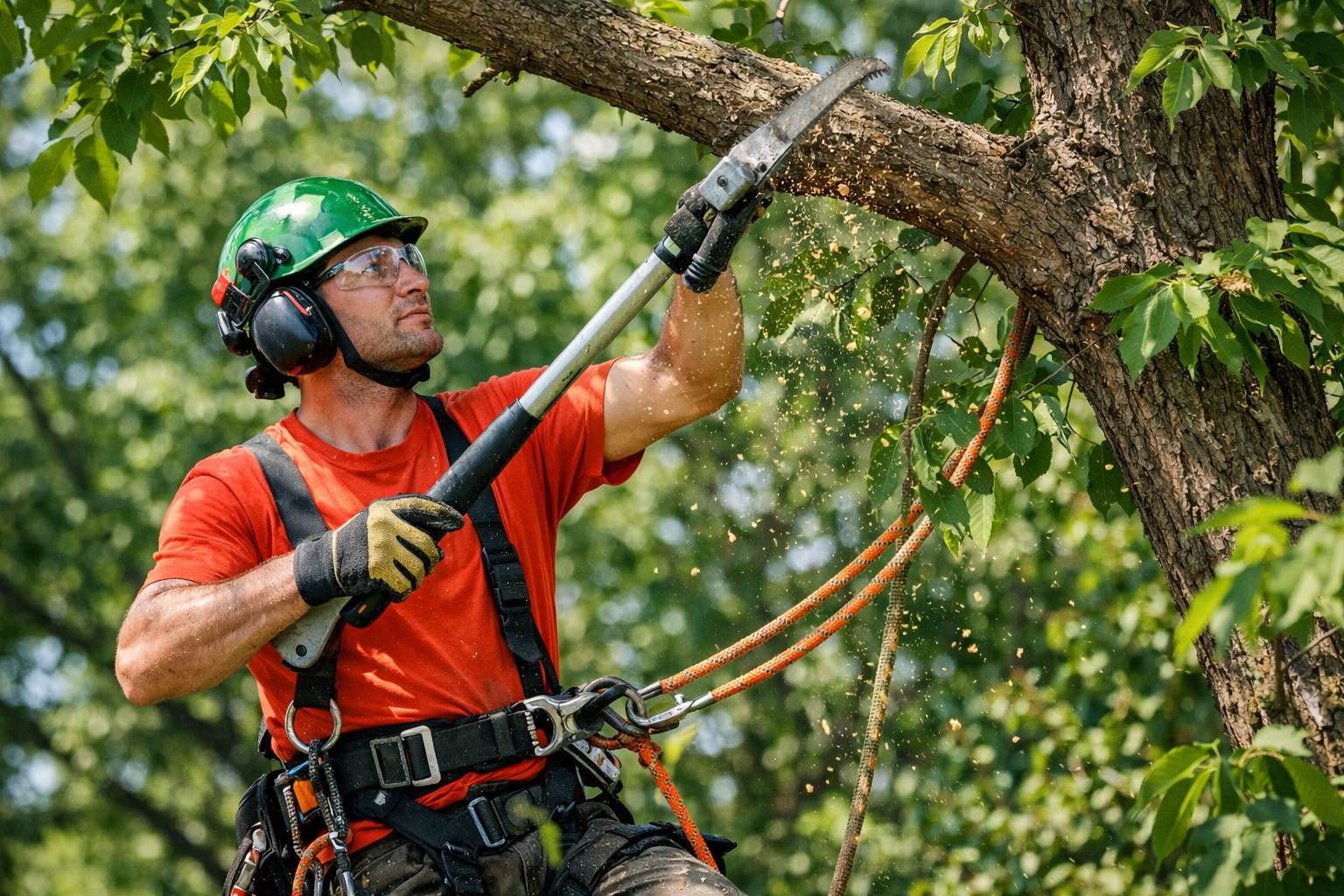
Trees are living investments. Proper pruning is a vital health measure required to prevent disease, mitigate storm damage, and promote structural integrity.
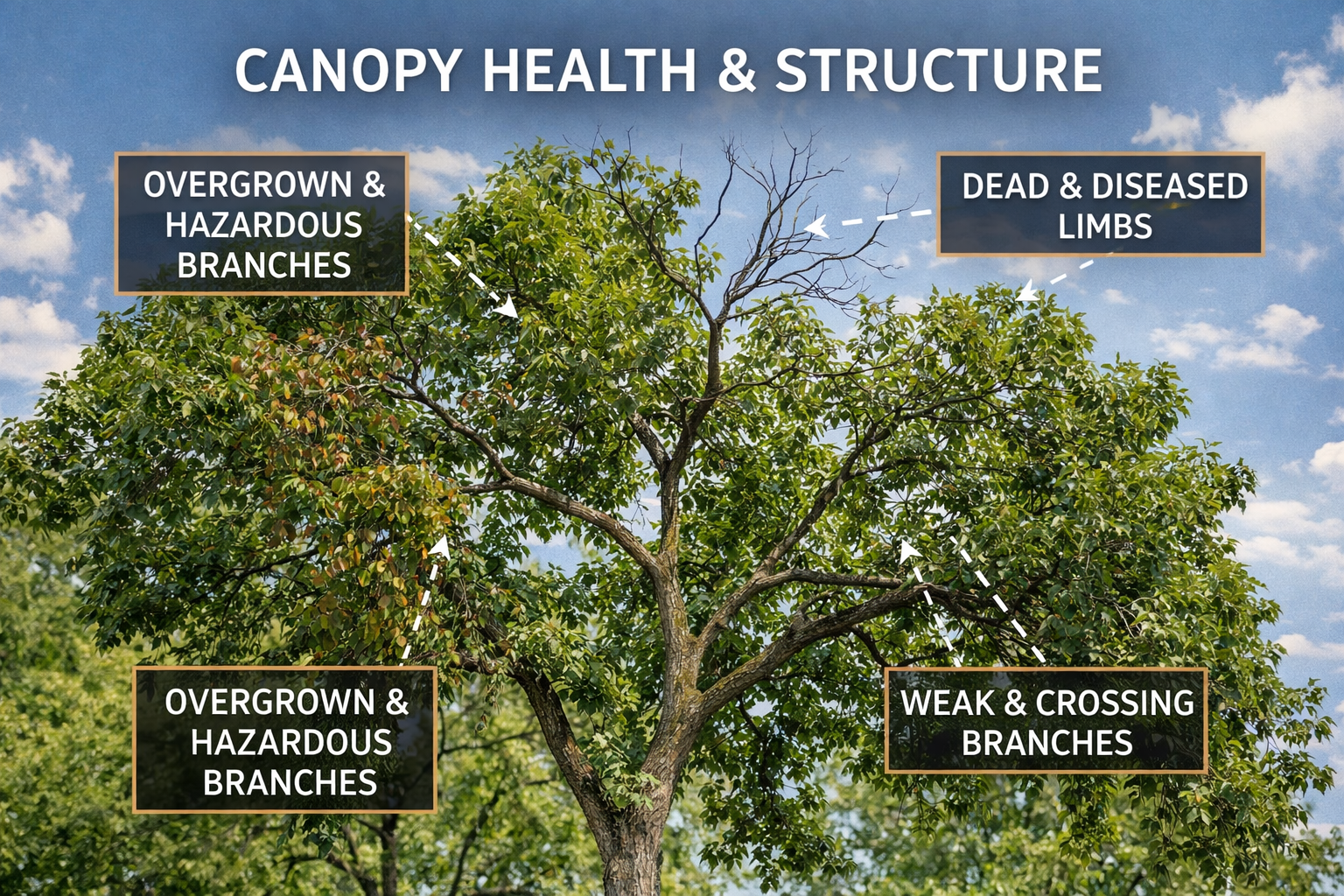
Our certified experts perform surgical reductions, selective deadwood removal, and crossing branch thinning to improve canopy air circulation.
The Science of
The Cut.
Landscapers hack. Arborists surgically remove. Understanding tree biology is the difference between a thriving canopy and irreversible decay.
The Branch Collar
We make precise cuts outside the branch collar. Cutting this area destroys the tree's ability to heal.
Compartmentalization
Proper cuts allow the tree to naturally seal wounds with callus tissue, blocking fungal spores.
The 3-Cut Method
For heavy limbs, we utilize the 3-cut drop method to ensure the bark never peels or tears.
Anti-Topping Policy
We strictly forbid 'topping'. Removing the main leader starves the tree and forces erratic regrowth.
Targeted
Solutions.
Crown Thinning
Selective branch removal to increase light penetration and reduce wind resistance.
Deadwooding
Extraction of dead, diseased, or dying branches to eliminate safety hazards.
Crown Raising
Removing lower branches to provide vertical clearance for buildings and vehicles.
Directional Pruning
Training canopy growth away from power lines, roofs, and neighboring properties.
Fruit Tree Pruning
Specialized winter/spring dormant pruning to maximize structural health and fruit yield.
Ornamental Shaping
Architectural shearing and shaping for structural hedges and ornamental shrubs.
Common Questions.
When is the best time of year to prune a tree in Buffalo?
What is 'topping' and why do you refuse to do it?
Will pruning my tree help it survive heavy winds and snow?
Should I apply wound dressing or paint to the pruning cuts?
Enhance
Vitality.
Preventative pruning is the best defense against tree failure. Schedule a comprehensive health assessment with our experts today.
Schedule Assessment
The
Technical.
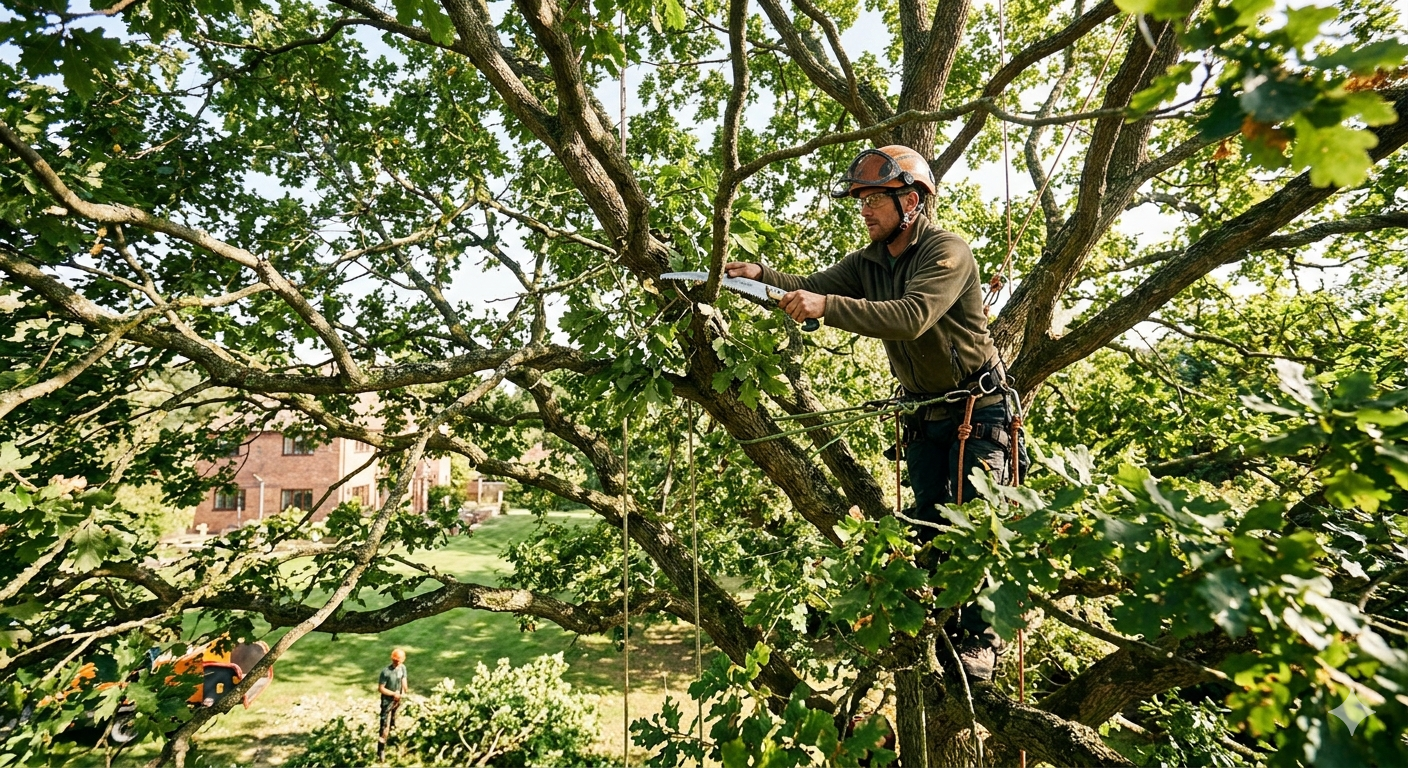
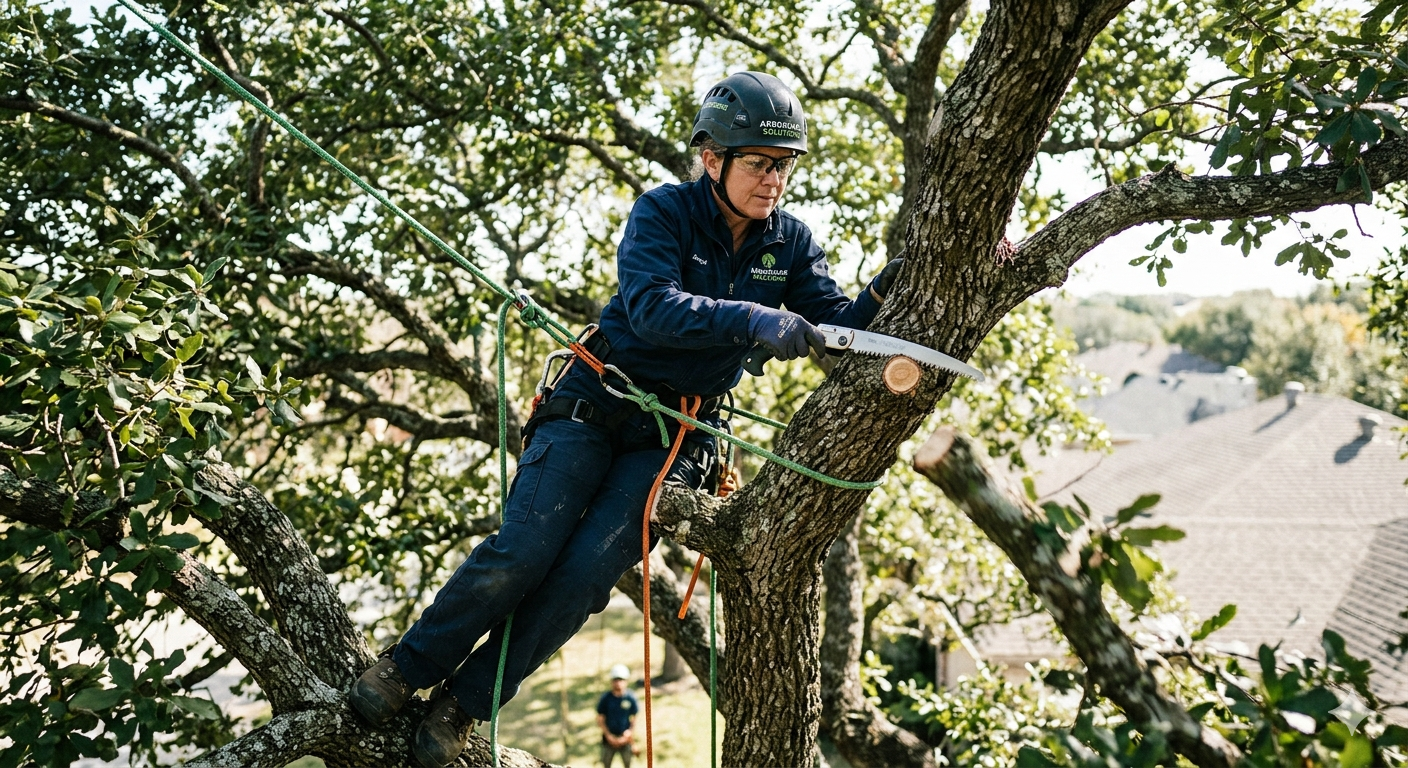
Proper pruning improves structure, appearance, and long-term tree performance.
Tree pruning is not only about cutting back growth. It is a structural and health-focused service that helps manage clearance, reduce weak growth, remove dead material, and improve how the canopy develops over time. In Buffalo, pruning also plays a practical role in storm preparation and seasonal risk reduction.
Healthier Branch Structure
Selective pruning helps remove damaged or poorly attached limbs while guiding stronger future growth patterns.
Clearance And Safety
Pruning can improve access around roofs, walkways, driveways, and structures while reducing interference from overextended limbs.
Seasonal Resilience
Trees with cleaner structure and less deadwood generally handle wind, ice, and snow stress better than neglected canopies.
For Western New York properties, pruning is one of the most important recurring tree-care services because it supports safety, appearance, and healthier long-term canopy development.
Explore the next service that fits your property.
Many projects overlap. These services are commonly scheduled together to improve curb appeal, safety, and year-round property care.
Tree Services
Support broader tree health and structure with full-service arbor care.
Cabling & Bracing
Reinforce vulnerable limbs and stems where pruning alone is not enough.
Disease & Pest Management
Address visible decline, leaf issues, and pest pressure found during pruning work.