
Identifying Emerald Ash Borer Damage Early
Learn some visible signs associated with emerald ash borer concerns and why declining ash trees may need further professional assessment.
Taj Landscaping
Buffalo, New York
Start by Confirming the Tree Species
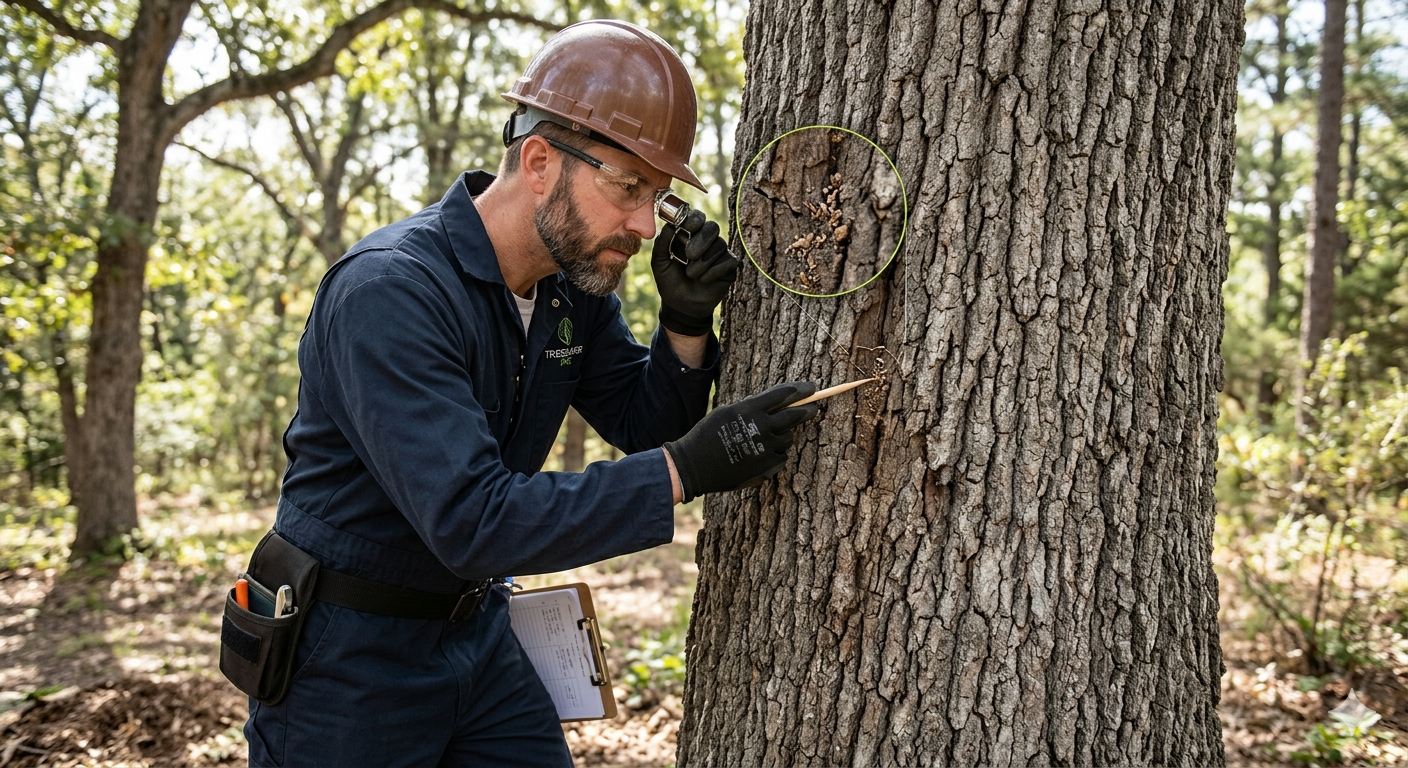
Emerald ash borer affects ash trees, so identifying the tree is an important first step before assuming that visible decline is related to this insect.
Tree decline can have many causes, including environmental stress, root problems, storm damage, disease, construction impacts, or other insects.
Possible Signs Worth Investigating
A declining ash tree may show several visible changes. No single symptom should automatically be treated as a diagnosis because similar signs can occur for other reasons.
- Thinning or declining canopy
- Dead branches in the upper crown
- Changes or splitting in the bark
- Increased woodpecker activity
- Small exit holes or insect activity
- New shoots developing lower on the trunk or branches
Why Early Assessment Matters
A tree with significant decline or dead branches can become more difficult to manage as its condition worsens.
If an ash tree is showing noticeable decline, assessment can help determine whether monitoring, pruning, another tree-care step, or removal should be discussed.
Avoid Diagnosing a Tree From One Photo
Photos can be useful for showing visible symptoms, but tree condition often depends on factors that are easier to understand at the property, including canopy condition, trunk defects, root-zone changes, nearby construction, and overall site conditions.
If the tree is near a house, driveway, sidewalk, utility area, or other frequently used space, avoid standing underneath obviously damaged or hanging branches while arranging further review.
Related Services
Explore Services Related to This Guide
Property Service Request
Have a Similar Property Question?
Tell us the property location, service you are considering, and what you want addressed.